Theory page Class 12 PhysicsChapter map Class 9 PhysicsWorked numericals Class 9 PhysicsDiagrams Class 9 ScienceQuestion set Class 9 MathematicsSolution manual Class 9 MathematicsQuestion paper Class 10 ScienceEntrance practice JEE Main and NEETOlympiad practice Class 4, IMO and NSOUnseen passage Class 8 English
Questions and solutions
Class 4, IMO pattern Mathematics
What fraction is shaded?
What fraction of the bar is shaded?
(a) (b) (c) (d)
Answer
Answer: (a). 3 of the 8 equal parts are shaded.
Option (c) compares shaded parts with unshaded parts. Option (b) counts the white parts.
Class 4, NSO pattern Science
Which one shines by itself?
Which of these gives out its own light?
(a) The Moon (b) The Sun (c) A mirror (d) The Earth
Answer
Answer: (b). The Moon only reflects sunlight, which is why many children choose it.
Classes 3, 8 and 12 English and language control
One fact, three readers
Class 3: The Moon has no light of its own. The Sun lights it up.
Class 8: The Moon makes no light of its own; we see sunlight reflected from its surface.
Class 12: Though it looks bright, the Moon returns only about 12 per cent of the sunlight that reaches it.
Class 6 Science
What will end X do?
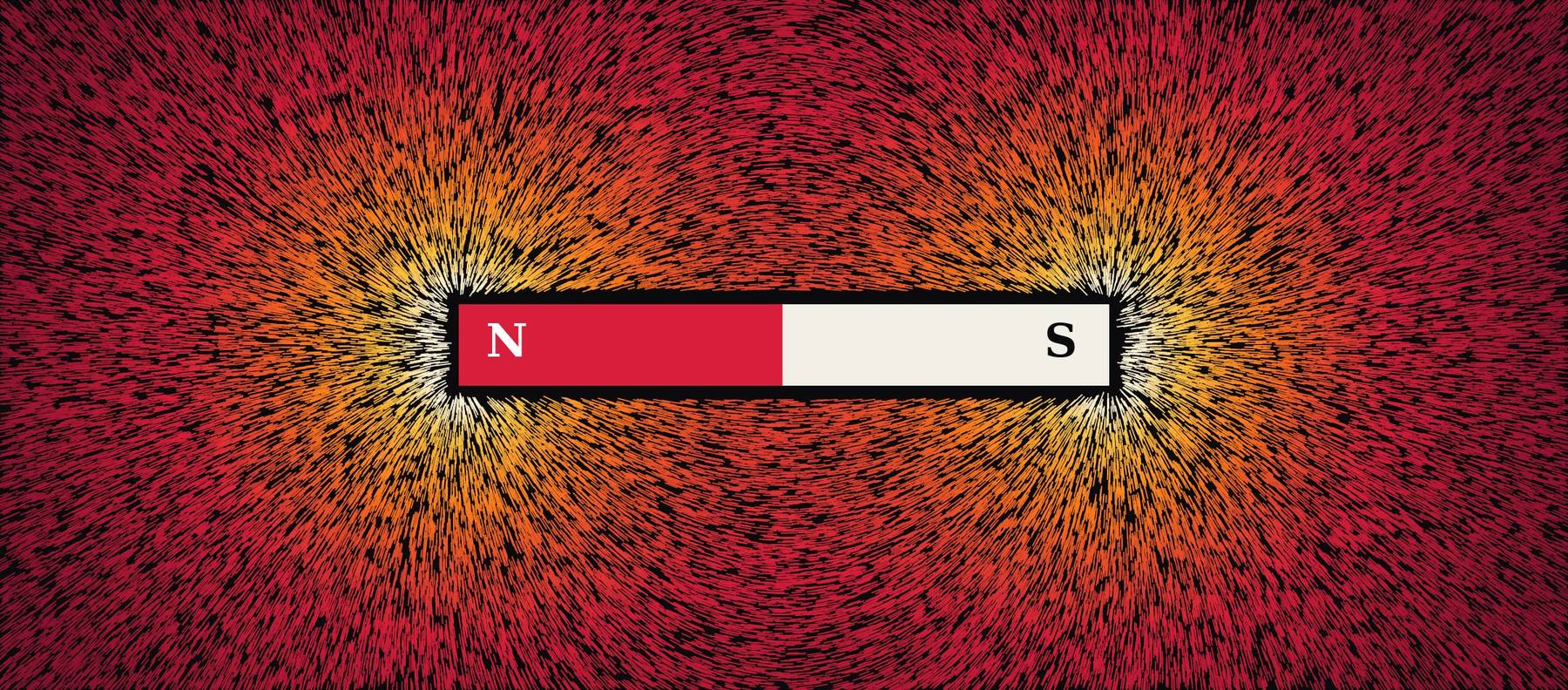
A bar magnet hangs from a thread and comes to rest. End X points north. You bring the north pole of a second magnet near X. What will X do?
(a) Move towards it (b) Move away from it (c) Stay still
Answer
Answer: (b) Move away from it. End X is a north pole, and like poles repel.
Class 8 Mathematics
Up by 10 per cent, down by 10 per cent
A shopkeeper raises a price of ₹1,000 by 10 per cent, then announces a 10 per cent discount. Is the price back to ₹1,000?
Solution
Given: Price ₹1,000, rise 10 per cent, discount 10 per cent
To find: Final price
Step 1: Find the raised price.
Step 2: The discount is taken on the raised price.
Hence, the price falls to ₹990, because the two percentages have different bases.
Answer: No, it is ₹990.
Class 8 History Social Science
Why salt?
In 1930, Mahatma Gandhi walked about 240 miles from Sabarmati to Dandi in 24 days to break the salt law. Many leaders doubted that salt could start a national movement. Why was it a clever choice?
Answer
Key points: Everyone used salt, rich and poor, so the tax touched every home. Salt was also easy to make from sea water, so ordinary people could break the law themselves. One simple act could unite the whole country.
Class 8, unseen passage English
The Seed Library
Every Saturday morning, a steel cupboard in the panchayat office of Pimpalgaon is unlocked. Inside are rows of glass jars, each labelled in neat Marathi handwriting. This is the village seed library. It was started two years ago by Shalaka Gawande, then a student of Class 8.
The idea came from her grandmother. Aaji had always saved seeds from the best plants in her kitchen garden. “Seeds from a shop give one good crop,” she told Shalaka. “Our own seeds learn our soil and our rain.”
A book library lends books. A seed library could lend seeds. A farmer borrows a small packet at sowing time. After the harvest, the farmer returns twice the quantity, saved from healthy plants. The library grows as it lends.
The first year was difficult. Only eleven families borrowed seeds, and some forgot to return them. Shalaka and two friends visited each house. They also kept a register of every packet that went out and came back.
Today, more than ninety families use the library. “I did not invent anything,” Shalaka says. “I only gave an old habit a new home.”
Explain the line “The library grows as it lends.”
Shalaka says she “did not invent anything”. Do you agree? Give a reason.
Rewrite in the passive voice: Shalaka and two friends visited each house.
The chart shows the total number of families by the end of each sowing season. There are two seasons in a year.
How many families joined in the second year (seasons 3 and 4)?
Answer key
Key: 1. Each borrower returns twice what was taken, so the stock increases with every loan. 2. Open: credit a reasoned view. 3. Each house was visited by Shalaka and two friends. 4. 63 − 11 = 52 families.
Class 9 Civics Social Science
Who governs?
Two parties, A and B, contest five seats of 100 voters each. Party A wins three seats by 51 votes to 49 and loses two by 20 votes to 80. Who governs, and who has more votes?
Solution
Given: 5 seats, 100 voters each
To find: Seats and total votes of Party A
Step 1: Add Party A’s votes.
Step 2: Find its share of the 500 votes.
Hence, Party A governs with 3 of 5 seats, though Party B has more votes (307). That is how first past the post can behave.
Answer: Party A governs; Party B has more votes.
Class 9 Economics Social Science
A good harvest, a poorer farmer
A farmer sells 100 quintals at ₹2,000 a quintal. Next year everyone has a bumper crop: the farmer sells 125 quintals, but the price falls to ₹1,400. Is the farmer better off?
Solution
Given: 100 quintals at ₹2,000; then 125 quintals at ₹1,400
To find: Income in each year
Step 1: Find the income in each year.
Hence, the farmer earns ₹25,000 less, because the price fell faster than the crop grew.
Answer: No, the income falls.
Class 9, case-based, 5 marks Mathematics
Storage boxes
A workshop makes cuboid boxes whose edges, in cm, are linear polynomials in . The volume is cubic cm, and one edge is cm.
Show that is a factor of . [1]
Find the other two edges. [2]
Find the volume when , and check it. [1]
Explain why . [1]
Solution
Given:
To find: The factor, the edges, the volume and the condition on x
Formula used: Factor theorem
Step 1: Put x = −2.
Step 2: Divide, then split the middle term.
Step 3: Put x = 5.
Step 4: Every edge must be positive.
Hence, the other edges are (x + 3) cm and (2x − 1) cm.
Marks: (i) V(−2) = 0 with the theorem named, 1. (ii) Quotient 1, factors 1. (iii) Value and check, 1. (iv) Reason, 1.
Class 10 Mathematics
Send the plan back
A plan shows a rectangular plot with 40 m of fencing and an area of . Find its sides.
Solution
Given: Perimeter 40 m, area
To find: The sides
Formula used: Discriminant, D = b² − 4ac
Step 1: The sides add up to 20 m, so call them x and 20 − x.
Step 2: Test the discriminant.
Hence, no such plot exists. A 40 m fence can enclose 100 m² at most, as a square.
Answer: The plan is wrong.
Class 10, 1 mark Physics
Which bulb glows brighter?
Bulbs rated 60 W, 220 V and 100 W, 220 V are joined in series across 220 V. Treat each resistance as fixed. Which one glows brighter?
(a) The 100 W bulb, as its rating is higher (b) The 60 W bulb, as the same current flows through a larger resistance (c) Both equally, as the same current flows through both (d) The 100 W bulb, as and its R is smaller
Solution
Given: Ratings 60 W and 100 W at 220 V, in series across 220 V
To find: The power in each bulb
Formula used: Resistance from the rating, R = V²/P. Ohm’s law, I = V/R. Power, P = I²R
Step 1: Find the resistances.
Step 2: Find the current.
Step 3: Find the power in each.
Hence, the 60 W bulb is brighter.
Answer: (b)
Wrong options: (a) takes the rating as the actual power. (c) sees the shared current but forgets R. (d) treats V as shared, as in parallel.
Class 10 Chemistry
Is the pH now 8?
Hydrochloric acid of pH 2 is diluted a million times. Is its pH now 8?
Answer
Answer: No. Each tenfold dilution adds 1 only at first. Near 7, water’s own ions take over, so the pH settles just below 7. Adding water cannot turn an acid into a base.
ICSE Class 10 test, 3 marks Physics
A block and tackle
A pulley system with 4 strands supporting the load lifts 240 N with an effort of 80 N. Find (a) its mechanical advantage and (b) its efficiency.
Solution
Given: Load 240 N, effort 80 N, velocity ratio 4
To find: (a) M.A. (b) Efficiency
Formula used: M.A. = Load/Effort. Efficiency = M.A./V.R.
Step 1: Find the mechanical advantage. [1]
Step 2: Find the efficiency. [2]
Hence, a quarter of the input energy is lost, mainly to friction and to lifting the lower block.
Answer: (a) 3 (b) 75 per cent
Class 12 Chemistry
Three half-lives
A first-order reaction is 75 per cent complete in 30 minutes. How long will it take to be 87.5 per cent complete?
Solution
Given: First order, 75 per cent in 30 min
To find: Time for 87.5 per cent
Formula used: After n half-lives, the fraction left is (1/2)n
Step 1: 75 per cent complete leaves one quarter, which is 2 half-lives.
Step 2: 87.5 per cent complete leaves one eighth, which is 3 half-lives.
Hence, the extra 12.5 per cent takes 15 more minutes.
Answer: 45 minutes
Class 12 Mathematics
Positive, so ill?
A disease affects 1 person in 1,000. A test is right 99 per cent of the time, for sick and healthy people alike. A person tests positive. What is the probability that this person is ill?
Hence, healthy people far outnumber the sick, so most positive results are false.
Answer: About 9 per cent
Class 12, NEET Biology
A rare disease, a common gene
A recessive disorder appears in 1 birth in 10,000. Roughly how many people carry the gene without showing it?
Solution
Given: q² = 1/10000
To find: Carrier frequency 2pq
Formula used: Hardy–Weinberg, p² + 2pq + q² = 1
Step 1: Find the allele frequencies, then the carriers.
Hence, a disorder seen in 1 birth in 10,000 is carried by about 1 person in 50.
Answer: About 1 in 50
NEET pattern Biology
Digestion: match the pairs
Match: P Salivary amylase, Q Pepsin, R Trypsin, S Bile salts, with 1 Emulsifies fats, 2 Breaks starch in the mouth, 3 Acts in the acidic stomach, 4 Secreted by the pancreas.
A magnet of mass M slides on a smooth vertical rod above an identical fixed magnet, like poles facing. The repulsion is . It floats at . Pushed a little and released, it oscillates with period seconds. Take . Find the integer N.
Solution
Given: h = 0.025 m, g = 10 m s−2
To find: N
Formula used: Newton’s second law. Binomial approximation. Period, T = 2π/ω
Step 1: Balance the forces at r = h.
Step 2: Move the magnet up by a small x.
Step 3: The motion is simple harmonic.
Hence, only h and g matter.
Answer: N = 20
Class 12 and JEE Physics
Why so few large deflections?
Alpha particles of 7.7 MeV strike a gold foil. What fraction turns through more than 90°? Take Z = 79, ke² = 1.44 MeV fm, n = 5.9 × 1028 m−3 and t = 2.1 × 10⁻⁷ m.
Solution
Given: E = 7.7 MeV, Z = 79, ke² = 1.44 MeV fm, n = 5.9 × 1028 m−3, t = 2.1 × 10⁻⁷ m
To find: Fraction f
Formula used: Closest approach, d = 2Zke²/E. Deflection law, b = (d/2) cot(θ/2). Fraction, f = πb²nt
Step 1: Find d, then b for 90°.
Step 2: Find the fraction.
Hence, about 1 particle in 1,20,000 turns that far.
Answer: 8.5 × 10⁻⁶
B.Sc. Physics
How weak is paramagnetism?
Free electrons, each of moment 9.27 × 10⁻²⁴ J T−1, sit in a field of 1 T at 300 K. Out of every 1000 electrons, how many more point along the field than against it?
Solution
Given: B = 1 T, T = 300 K, kB = 1.38 × 10⁻²³ J K−1
To find: Excess in 1000
Formula used: Fractional excess, P = tanh x, where x = μBB/kBT
Step 1: Find x. Since x is very small, tanh x is nearly x.
Hence, heat motion all but wins at room temperature.
Answer: About 2
B.Sc., quantum information Physics
Two gates make a third
Show that H Z H = X, where H is the Hadamard gate, and say what this means.
Solution
Given:
To find: HZH
Step 1: Multiply Z by H.
Step 2: Multiply by H on the left.
Hence, a phase flip seen in the Hadamard basis is a bit flip.
M.Sc., research Physics
A magnet made of opposing moments
In GdFeO3 the Fe3+ moments order antiferromagnetically, so they should cancel. Tilted FeO6 octahedra and the Dzyaloshinskii–Moriya interaction cant each moment slightly. Take the weak moment as 0.06 μB per Fe and find the canting angle.
Research area: Ce-doped GdFeO3, Ferroelectrics, Vol. 587, 2022.
Solution
Given: S = 5/2, g = 2, so μ = 5 μB; m = 0.06 μB per Fe
To find: Canting angle φ
Formula used: Net moment per Fe, m = μ sin φ
Step 1: Components along the axis cancel in pairs, and the transverse components add.
Hence, a tilt under one degree turns a cancellation into a measurable magnet.
Answer: About 0.7°
Covers
Painted cover Art made with an AI image tool to a written briefGravitation The Sun, eight planets and a comet, drawn in TikZStructure of the atom 463 alpha-particle paths, each computedWrap-around cover Back, spine and front on one press sheet, with crop and fold marks